System
What is Feng Shui?
Draft — page expanding
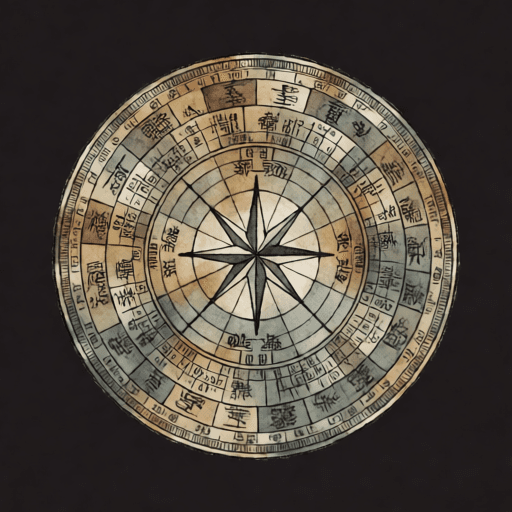
Feng Shui (風水, “wind-water”) is the classical Chinese geomantic tradition of reading and shaping space as a circulation of qi. Two branches have shaped it: the Form school, which reads the shape of the land and the flow of wind and water, and the Compass school, built on the eight directions and the bagua, which includes the Flying Star and Eight Mansions methods. In Divination Nexus Feng Shui uses the Eight Mansions lineage: a dwelling is mapped from the front door into the eight bagua zones plus the center, each zone carrying a fixed trigram, element, direction, and life domain. A reading is the state of the zones — whether each is supported, starved, cluttered, or colliding — read through the Wu Xing generation-and-control grammar. It answers where, not who: what this room does to the person in it. It is the corpus’s only modality whose input is a place, not a person, a moment, or a chart.
What job does it do?
Place. Epistemic badge: spatial.
What is traditional, and what is our interpretive layer?
Traditional: the qi-circulation principle, the eight-direction bagua zone map, and the Eight Mansions and Flying Star school lineage. Interpretive: Divination Nexus’s named flow verdicts (curved, straight, pooled, colliding), its one-move remedy rule, and its mapping of each zone onto the 12 Inner Alignment Dimensions are the CelestialNexus layer, not classical feng shui claims.
Traditional mechanic, tables, and named sources live in the vault file Celestial-FengShui.md.
What is it not?
It is not a tropical Western natal wheel. It is not a fake cast from a date unless the engine is honestly computational. Harm-capable historic verdicts are documented, not performed.
Tools & books
As an Amazon Associate, Divination Nexus earns from qualifying purchases. Craft materials are study tokens, not consecrated sets. Affiliate disclosure.